Monday, February 26, 2007

Found at Today's devotionals


Found this morning on the the Ann Arbor church's webpage as I was accessing its Phyllis Tickle Divine Hours devotional site:

"The truth is not always halfway between two opposing views."
--Fred Friendly

Sunday, February 25, 2007

At last, ashes.


The worst times are the times of waiting. Waiting for a prognosis. And then it comes: the news that finally confirms all you've suspected, or that tells you you were kidding yourself. But whatever the news, good or bad, when it finally comes, there is relief. Relief that now there is truth; that there is a reality which must be lived into.

While these times are tremendously "meaningful," their meaning is derivative from what is real. In the end, the truth gets out. And, thank God, in the end, there is Him who Is the Way the Truth and the life.
Lent began in earnest today. Today we tasted ashes.

Sunday, February 18, 2007

HUMOR: What if Thomas Aquinas had been a tabloid journalist?

WHETHER ELVIS WAS KIDNAPPED BY SPACE ALIENS

http://praxeology.net/weekly-world-summa.htm

Why I am a Thomist, or What happens when you abandon Aristotle's logic and metaphysics


To two of my philosophy students, one at NCC and one at EBC:

Here's yet another article I have stumbled upon that you might find stimulating. It's about how Protestants rejected Aristotle's metaphysics but couldn't abandon his logic. This led to rigid Calvinists who were all head and no heart; and later to the pietist reaction against them, (pietists = all heart but no head.)

In the wake of the Reformation we are left with shards, not only ethically, as MacIntyre argues, but metaphysically and logically. This is why I am a Thomist. I don't want to abandon either Aristotle's metaphysics or his logic, but rather want to see them completed in Christ. File for future reference!

Protestant Scholasticism

A method of thinking developed in early Protestantism, which grew stronger in the seventeenth century and became a widely accepted way to create systematic Protestant theologies. Even though the major Protestant Reformers attacked the theology of the medieval schoolmen and demanded total reliance on Scripture, it was impossible either to purge all scholastic methods and attitudes derived from classical authors or to avoid conflicts that required intricate theological reasoning as well as biblical interpretation.

Several factors account for the growth of Protestant scholasticism: formal education, confidence in reason, and religious controversy. Reliance on logical methods derived from Greek and Roman authors was purged from sixteenth century educational insititutions. Aristotle, for example, upon whom the medieval scholastics had relied, continued to be taught by Protestants: Melanchthon at Wittenberg, Peter Martyr Vermigli at Oxford, Jerome Zanchi at Strassburg, Conrad Gesner at Zurich, Theodore Beza at Geneva. Though these teachers did not accept Thomas Aquinas's medieval scholastic theology, which also relied heavily on Aristotle's logic and philosophy, they did teach Aristotle's deductive logic and gave reason an important place in theology.

Though Luther (following William of Ockham) and Calvin (following French humanists) decried scholastic reliance on reason and wanted instead to limit their theology to humanist linguistic analysis of Scripture, the Protestant scholastics, without breaking from the major Reformers, were more amenable to human reason. Reason became a means to develop coherent theology out of the great variety of biblical texts. Further, Renaissance learning, though it stressed textual analysis, also placed confidence in human rationality. The Protestant use of scholastic techniques and attitudes consequently kept them in the mainstream of early modern philosophy, which, though it moved away from deductive logic, maintained confidence in reason. Protestant theologians, especially the Calvinists, could use scholastic methods to inquire beyond biblical texts into the intricacies and implications of Protestant theology, especially when election and the will of God were considered.
Theological controversy also encouraged Protestant scholasticism. When Luther and Zwingli disagreed over the Lord's Supper and when Calvinists entered great controversies over predestination, protagonists often resorted to scholastic logic. The controversies themselves called for thorough, intricate argumentation; for biblical texts on the issues were interpreted in a variety of ways. Also, those who won the controversies embodied victory in tightly reasoned doctrinal statements. Thus, there is strong evidence of Protestant scholasticism in the Canons of Dort, the Westminister Confession, and the Helvetic Confession of 1675.


The influence of Protestant scholasticism was both immediate and long - range. Among Lutherans, the essential doctrine of justification by faith was transformed into a rather complicated theory of conversion by the most famous Lutheran scholastic, Johann Gerhard (1582 - 1637). Gerhard used Aristotelian and scriptural proof in his Loci Theologicae (9 vols.). While this work was important for shaping Lutheran orthodoxy, in the seventeenth century German pietists replaced scholasticism with a greater emphasis on experiential Christianity. Among the Reformed, two scholastic traditions were developed. Peter Ramus modeled his logic on Plato and Cicero in an attempt to avoid too great an emphasis on metaphysics. Though his work was banned in various continental Protestant centers (Wittenberg, Leiden Helmstedt, Geneva), Ramus had a great influence on Puritan thought in England and America.

The dominant Reformed scholastics, however, were Beza, Vermigli, Adrianus Heerebout, and, most importantly, Francis Turretin (1623 - 87). Turretin's Institutio became the standard work for modern Protestant scholastics, as it was used as a textbook to shape the modern Princeton Theology. Reformed scholasticism in this tradition led to what is generally labeled Calvinist orthodoxy.

The theology of this branch of Protestant scholasticism was, as in the case of Gerhard, dependent on scriptural evidences and Aristotelian logic. The Reformed scholastics concentrated for the most part on questions evolving from predestination, and thus produced a rather rigid Calvinism. At the same time, the movement was amenable to the use of reason, thus allowing the Reformed to adapt to modern rationalist and Enlightenment philosophy quite easily. Noteworthy in this regard is the rather easy accommodation of philosophy and theology in the Scottish Enlightenment. The impact of Protestant scholasticism's methods and outlook was threefold: it created a systematic, well - defined, and aggressive Protestant theology; it led to a reaction by those who emphasized the emotional character of Christian piety; and it encouraged accommodation to early modern philosophy.

R J Vandermolen(Elwell Evangelical Dictionary)


BibliographyB Armstrong, Calvinism and the Amyraut Heresy; J W Beardslee, III, ed. and tr., Reformed Dogmatics; J P Donnelly, "Italian Influences on the Development of Calvinist Scholasticism," SCJ 7:81 - 101; J H Leith, An Introduction to the Reformed Tradition; NCE, III; O Grundler, "The Influence of Thomas Aquinas upon the Theology of G Zanchi," in Studies in Medieval Culture; B Hall, "Calvin Against the Calvinists," in John Calvin, ed. G E Duffield; P O Kristeller, Renaissance Thought: The Classic, Scholastic, and Humanist Strains; R Scharlemann, Aquinas and Gerhard: Theological Controversy and Construction in Medieval and Protestant Scholasticism.
The individual articles presented here were generally first published in the early 1980s. This subject presentation was first placed on the Internet in May 1997.

http://mb-soft.com/believe/txc/scholasp.
presentation was last updated on 12/31/2006 14:14:00
Copyright Information
Send an e-mail question or comment to us:
E-mail
The main BELIEVE web-page (and the index to subjects) is at
http://mb-soft.com/believe/indexaz.html
http://mb-soft.com/believe/txc/scholasp.htm

Tuesday, February 13, 2007

from Ratzinger's Introduction to Christianity


"If there were only God and a collection of individuals, Christianity would be unnecessary. The salvation of the individual as individual can and could always be looked after directly and immediately by God, and this does happen again and again. He needs no intermediary channels by which to enter the soul of the individual…For the salvation of the mere individual there would be no need of either a Church or a history of salvation, an Incarnation or a Passion of God in this world…


Christian faith is not based on the atomized individual but comes from the knowledge that there is no such thing as the mere individual, that, on the contrary, man is himself only when he is fitted into the whole: into mankind, into history, into the cosmos….Man is a being that can only “be" by virtue of others….One is not a Christian because only Christians are saved; one is a Christian because for history Christian loving service has meaning and is a necessity….Being a Christian means essentially changing over from being for oneself to being for one another."


--[former] Joseph Cardinal Ratzinger, now Pope Benedict XVI, from Introduction to Christianity

Saturday, February 03, 2007

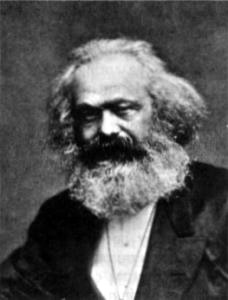
A chilling quote from Marx


"Between equal rights, force decides."
--Marx, Capital I, quoted by Fischer in The Essential Marx, p. 105.

This is why rights--though important--are not enough.

Your attitude should be the same as that of Christ Jesus:
Who, being in very nature God,
Did not consider equality with God something to be grasped,
but made himself nothing,
taking the very nature of a servant...

--Philippians 2: 5-7